Working in a Professional Orchestra
Working for a high level orchestra is exciting, but can also be daunting. This is because the musical standards and expectations are high. Playing in a professional, semi-professional or scratch orchestra, involves high level musical skills. But those who achieve repeated success at the high level have something else. They have good interpersonal abilities, high musical intelligence, musical empathy and a responsive energy.
With over 20 years experience, Matthew provides tips for success at the professional level. Although this article assumes you’re joining a group as second bassoon player, these points could be relevant for many orchestral musicians.
Be Prepared
Learn the music before the first rehearsal. No matter how good your reading skills are, this is not the time to sightread.
Most professional groups will provide music prior to the first rehearsal, if not, reach out and attain the music so you can be prepared. Know the tempos, know the tricky passages, know what is exposed and what isn’t. Every detail is important.
Professional players will know the music, whether they have played it before, or learnt it prior to the first rehearsal. Mistakes are rare, even at the first session. This is not the time to find yourself thinking “I missed that key signature” or “Whoops, I didn’t notice that note was tongued” or “I didn’t realise it was that fast or high”.
Orchestral Etiquette
Think about appearance or behaviour that could be distracting to others in an environment where intense concentration is occurring.
Appearance: Wear deodorant but not heavy scents. Be aware of small details that you may not have previously considered like, the odour of your shoes, hair or jacket. Avoid clothing or jewellery that could be distracting to others while playing, including headwear or hair styles that impact sight lines. Wear neat casual clothes to rehearsals.
Bassoon etiquette is also important: A good general rule is to point your bassoon bell at the ceiling at all times. Do not rest your bassoon on your lap. Do not ask someone to hold your bassoon for you. Bring a bassoon stand with you (unless the orchestra provides one). Don’t wave your bassoon, or flap your elbows excessively. At this level, your co-workers understand that musicality is more about your expression through the instrument than the movement of your arms, which can be distracting. And please don’t ever shadow-play the principal solos.
Rehearsals: Bring a pencil but don’t mark your part while you are playing. If you are given an instruction that you would like to notate, but don’t have time, commit the note to memory and write it in later.
Pre-rehearsal / Pre-concert Warm-up etiquette: Don’t play audition excerpts or bassoon concertos during the warm-up. Actually don’t play the concertos of any other instrument (on bassoon) during the warm up. Don’t practice your treble clef stratespheric high notes or the principal bassoon solos. These things are seen as disrespectful and irrelevant. Be ready to tune when the tuning note is played, and tune quickly.
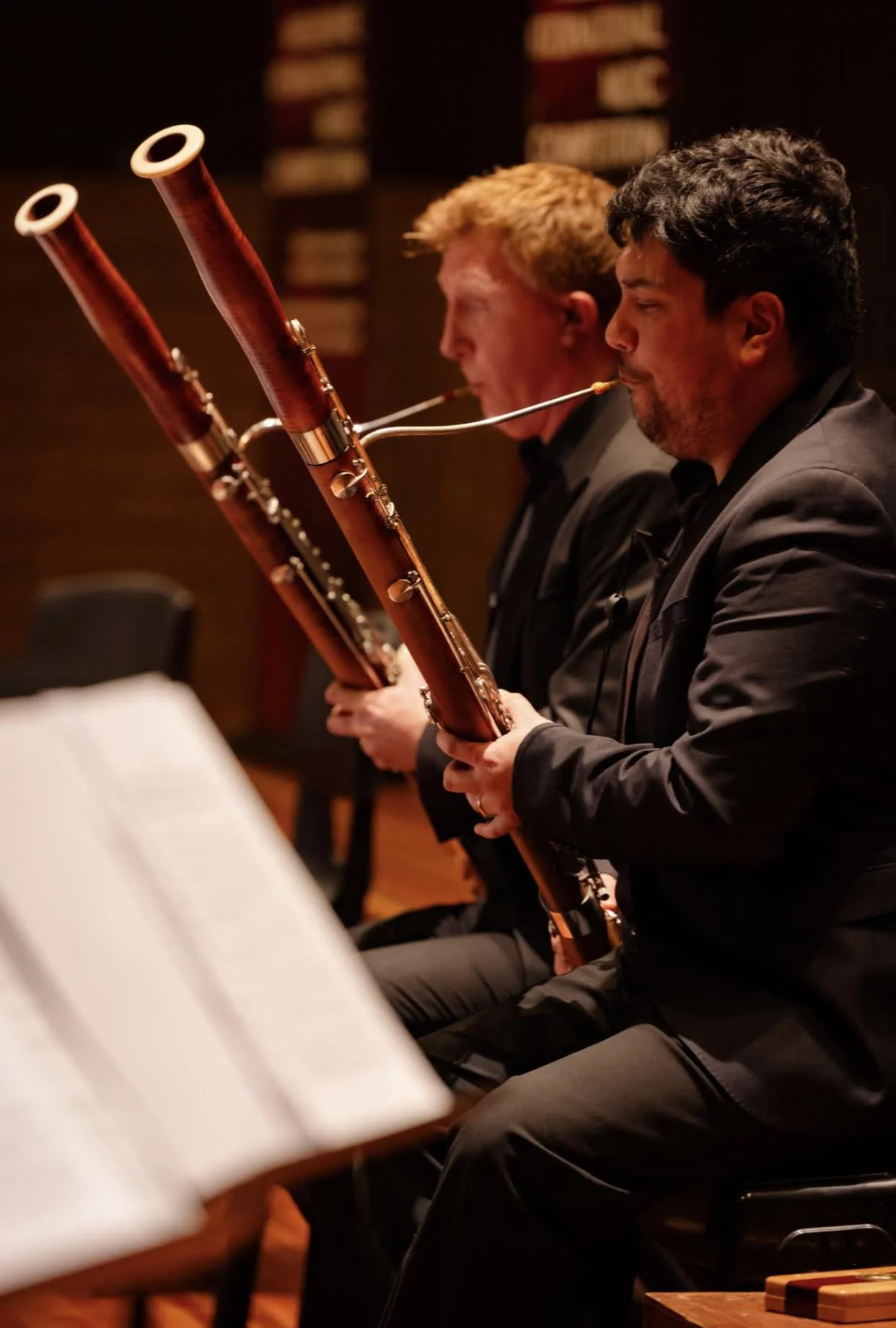
Matthew Angus plays tutti Bassoon. Its important to ensure your bassoon bell is pointed at the ceiling during rehearsals and performances and not lowered to below the height of the music stand. In a professional work-place a bassoon can become a hazard or a distraction to other players.
Be attentive:
Listen, feel and observe the non-verbal cues of those around you. Follow the leadership and guidance of your principal. Be aware of the conductor, but understand that others in the group will lead at times. Be open and responsive to the body-language of the players around you.
Having prepared well, you’ll be ready to lock into the tempi, even if it is faster or slower than you imagined. You’ll also to know when to ‘place’ a chord or moment or where not to drag. Slowing down on long or soft notes is a trap to avoid, as is speeding up on “faster” notes. Almost all professional groups avoid this.
Know yourself and what level of energy you need to play well. Bring a positive but relaxed energy with you. You’ll remember experiencing the unsettling feeling of a group whose energy is too excitable. The best activation levels for peak performance differ between people, however mostly a state of relaxed concentration works best.
Listen and be aware of the musicality beyond the notes. Drop your thirds when playing in triads. Lower your 7ths to balance the harmony. Bring out the moving parts or modal shifts. Play the music with line, shape and phrasing. Know when to bring out your part, to support the musicians around you. Observe the articulations. Lock into the tuning and adjust (even if it doesn’t feel right to you). Ask for help and guidance if you are unsure.
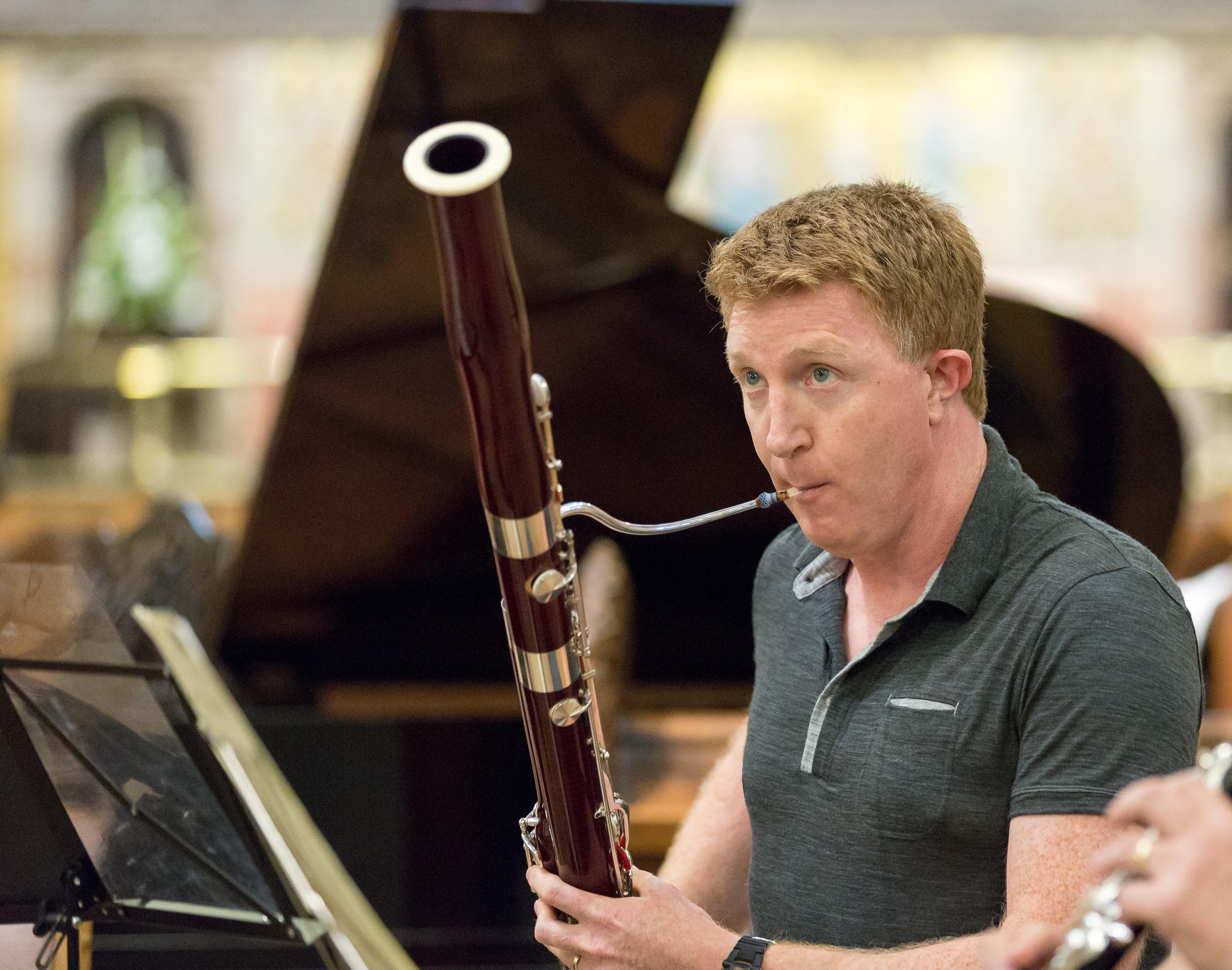
Matthew Angus plays bassoon during a rehearsal with a professional group. Well dressed, attentive and focused are among his top tips for orchestral success.
Playing a professional orchestral gig is an incredible musical experience. You might be surprised that the musicians are highly engaged in their work. Don’t worry if you are given abundant guidance by your principals. They may give you additional notes, or ask to ‘tune’ a chord or section. Their aim is to produce the best music and they will work with each other, and you, to achieve this. If you can take instruction and respond quickly you’ll grow as a musician and enjoy the experience!